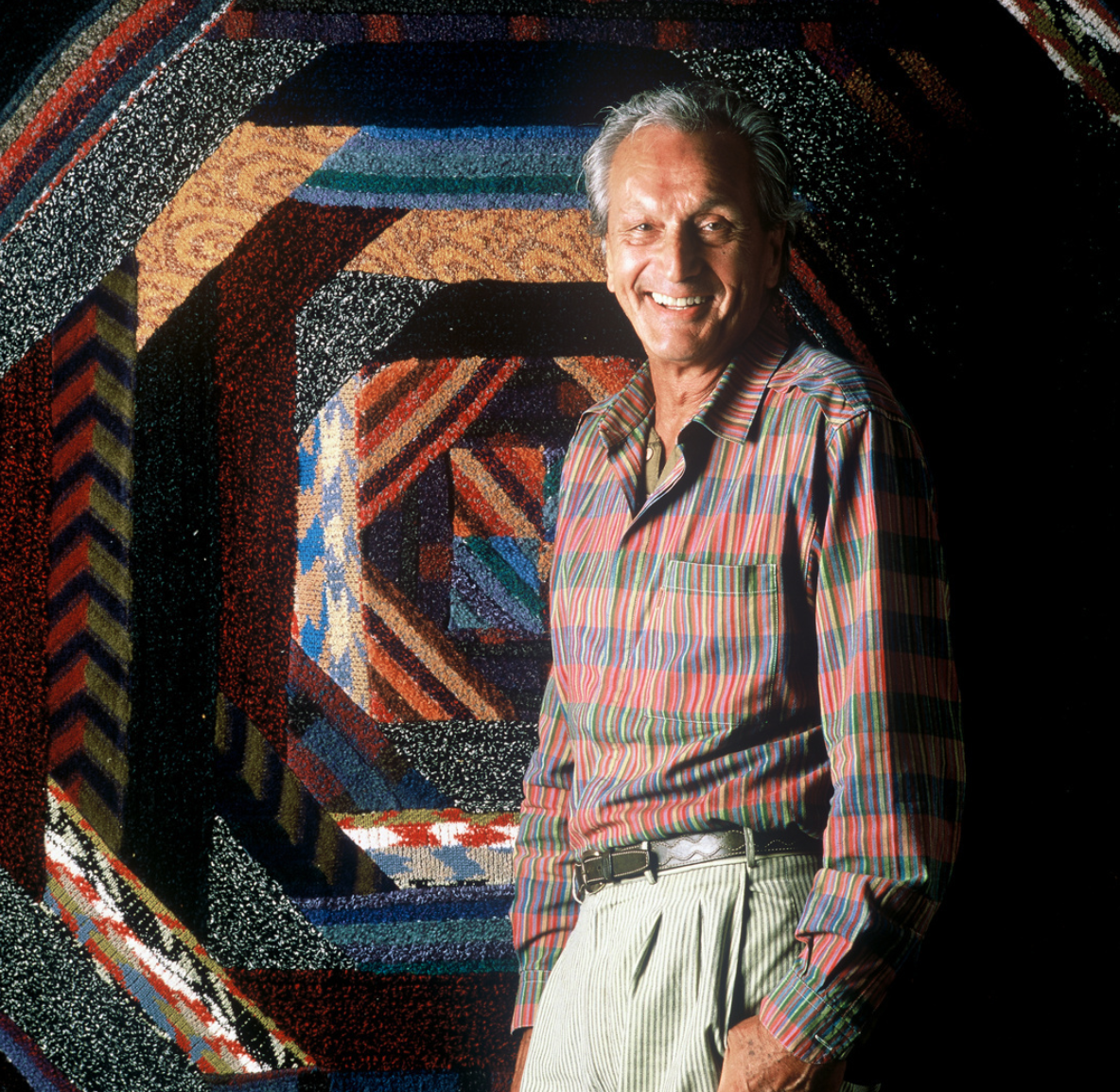
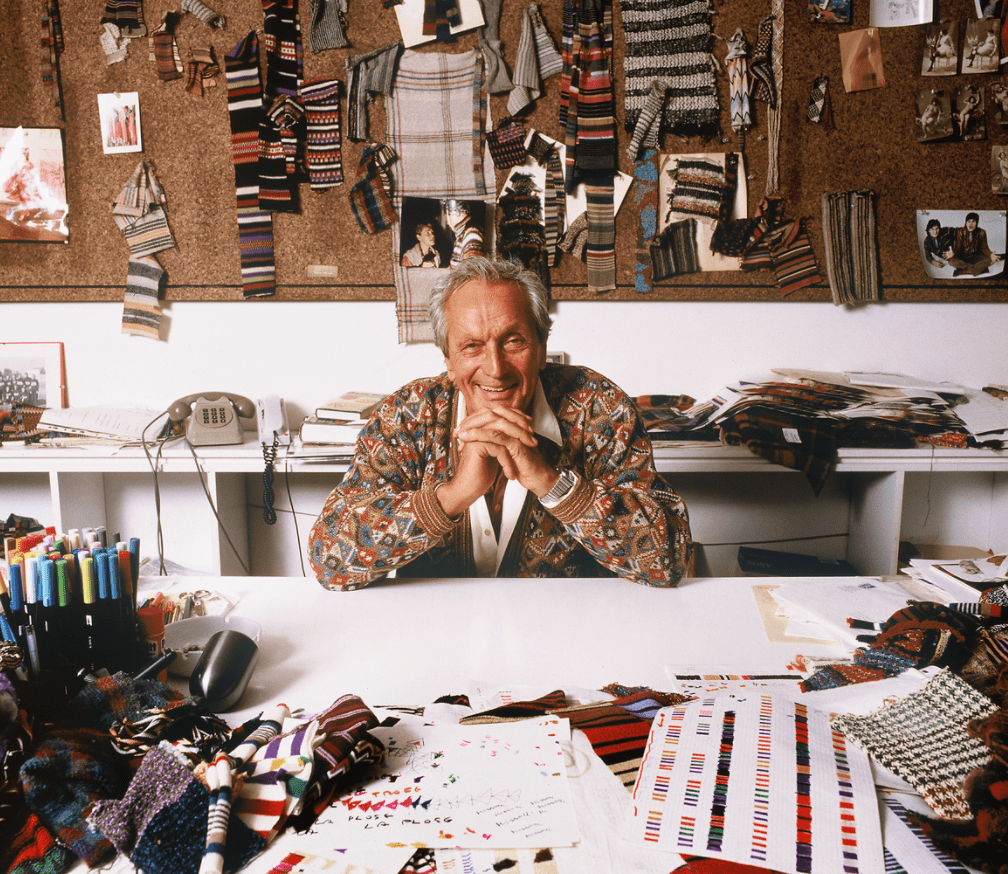
This week marks the would-be 100th birthday of fashion patriarch, Ottavio ‘Tai’ Missoni, who was born into Italian royalty and became an Olympic hurdler before he and wife Rosita revolutionised the knitwear industry with a mastery of colour and technical innovation.
A family-first business that pioneered the prêt-à–porter model, Missoni’s 70-year heritage in groundbreaking textiles stemmed from Ottavio’s sportswear knowledge (having produced jersey tracksuits for the Italian Track Team at the 1948 London Olympics), and Rosita’s expertise in handcrafted fabrics and embroidery learned at her parents’ shawl-making factory.
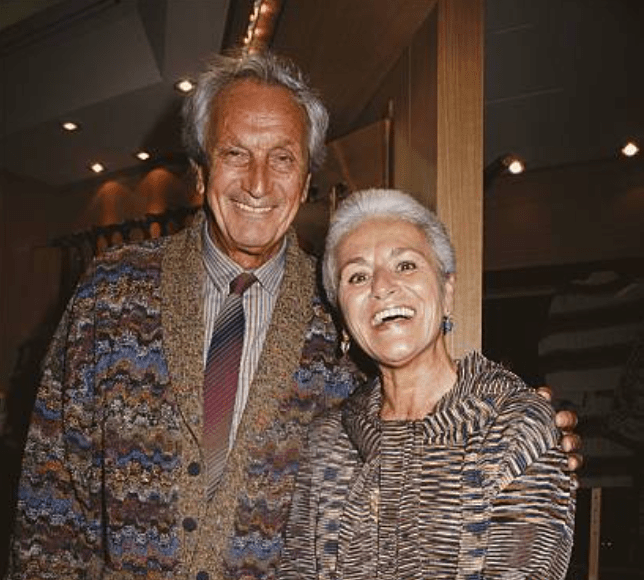
Inspired by the Modernist art scene in post-war Europe, Ottavio summarised his relationship with colour in saying,
“I like comparing colour to music: only seven notes and yet innumerable melodies have been composed with those seven… How many tones or shades does each colour have? An infinite number, just as always endless are the hues and nuances composing a work of art.”
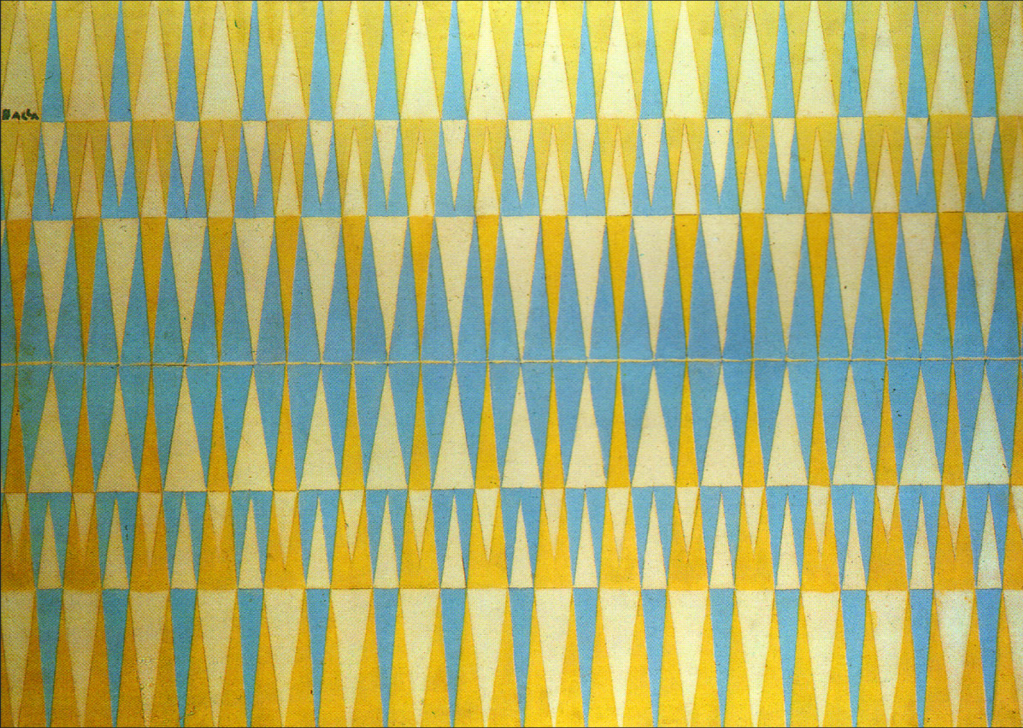
The duo’s love of dynamic palettes and kaleidoscopic pattern drew influence from the Lyrical Abstraction of Sonia Delaunay and Kandinsky, Futurists Gino Severini and Giacomo Balla, and the avant-garde works of Nino di Salvatore and Dadamaino.
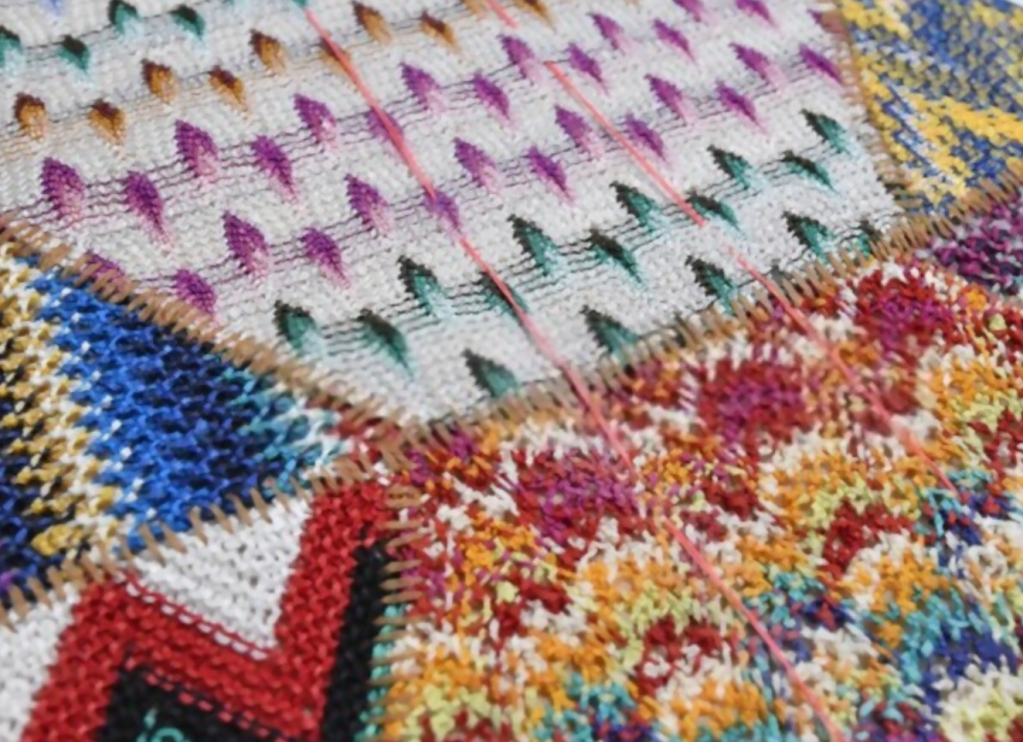
The distinctive Missoni zig-zag and geometric formations, created using intricately knitted net on specially adapted Raschel looms, came to define mould-breaking fashion and the sense of freedom and adventure of the mid-20th Century.
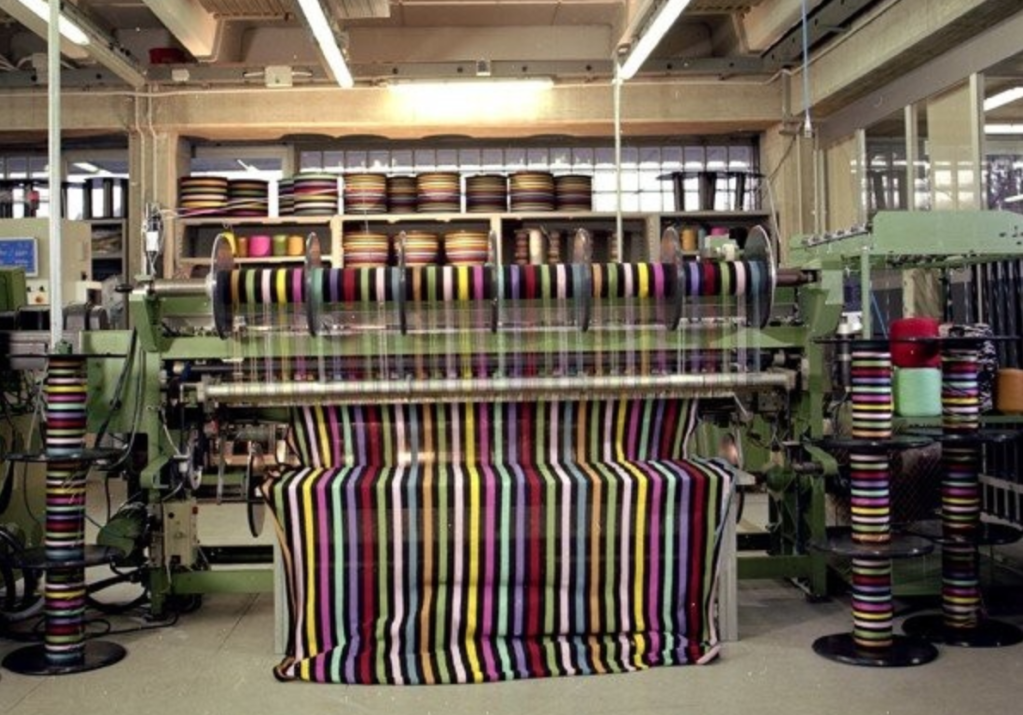
Ottavio and Rosita opened the house’s Lombardy factory in the late 1960s in Sumirago, a spot overlooking the Monte Rosa peaks where the family loved to spend weekends. Soon afterwards they relocated here entirely, making it just a short walk from home to studio. Ottavio’s philosophy questioned what would be the point of a life that focused solely on work, and in choosing to remain relatively small scale for a global and technically advanced brand, protected the label’s artisanal craftsmanship and heritage.
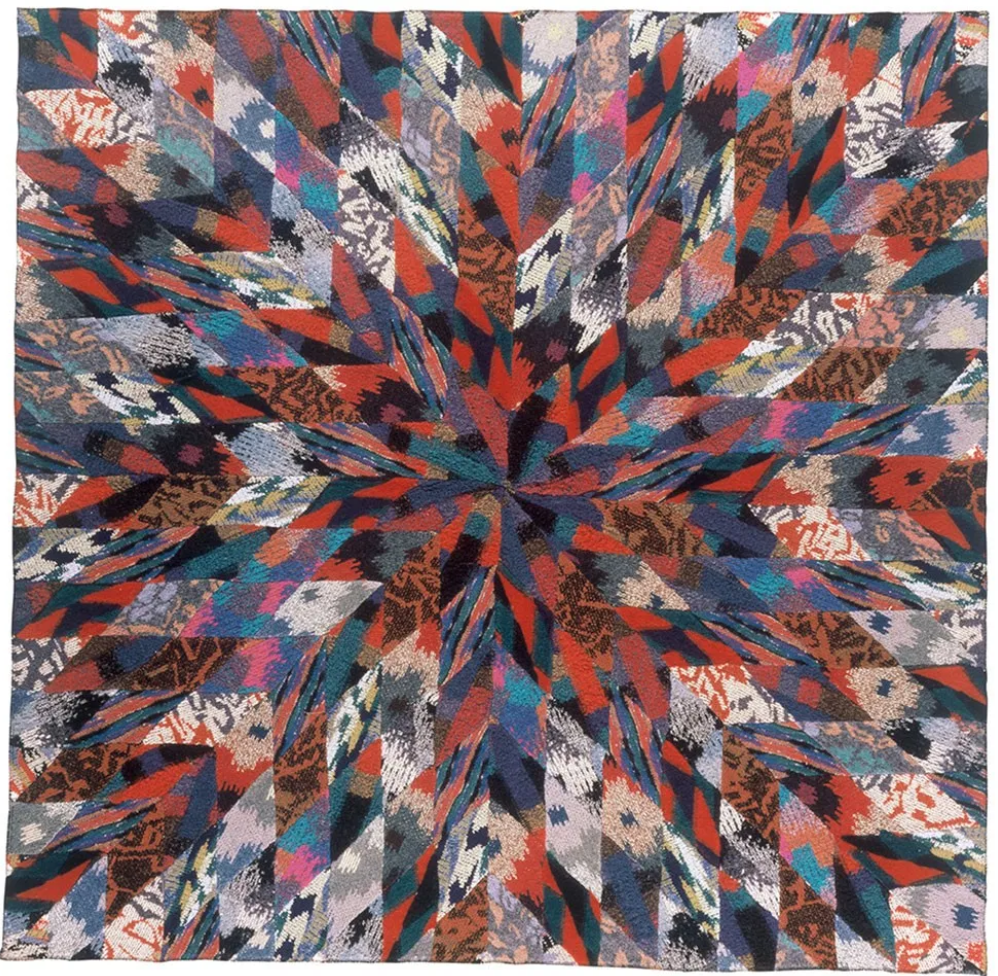
From the house’s golden years in the 1970s through to the 1980s, Ottavio focused on tapestries as his creative outlet utilising the arazzo patchwork technique to make eclectic wall hangings, and exploring the mirrored ideas of knitting art into fashion and creating fashion as art.
The Missoni children, Angela, Vittorio and Luca, and later the grandchildren, joined the business and the house is now shaped by three generations of women, Rosita, Angela and Margherita. This natural evolution of a fashion dynasty completed Ottavio and Rosita’s vision of harmonised family life, and has created a living, breathing archive of pattern play, colour and light.
 The Faisean