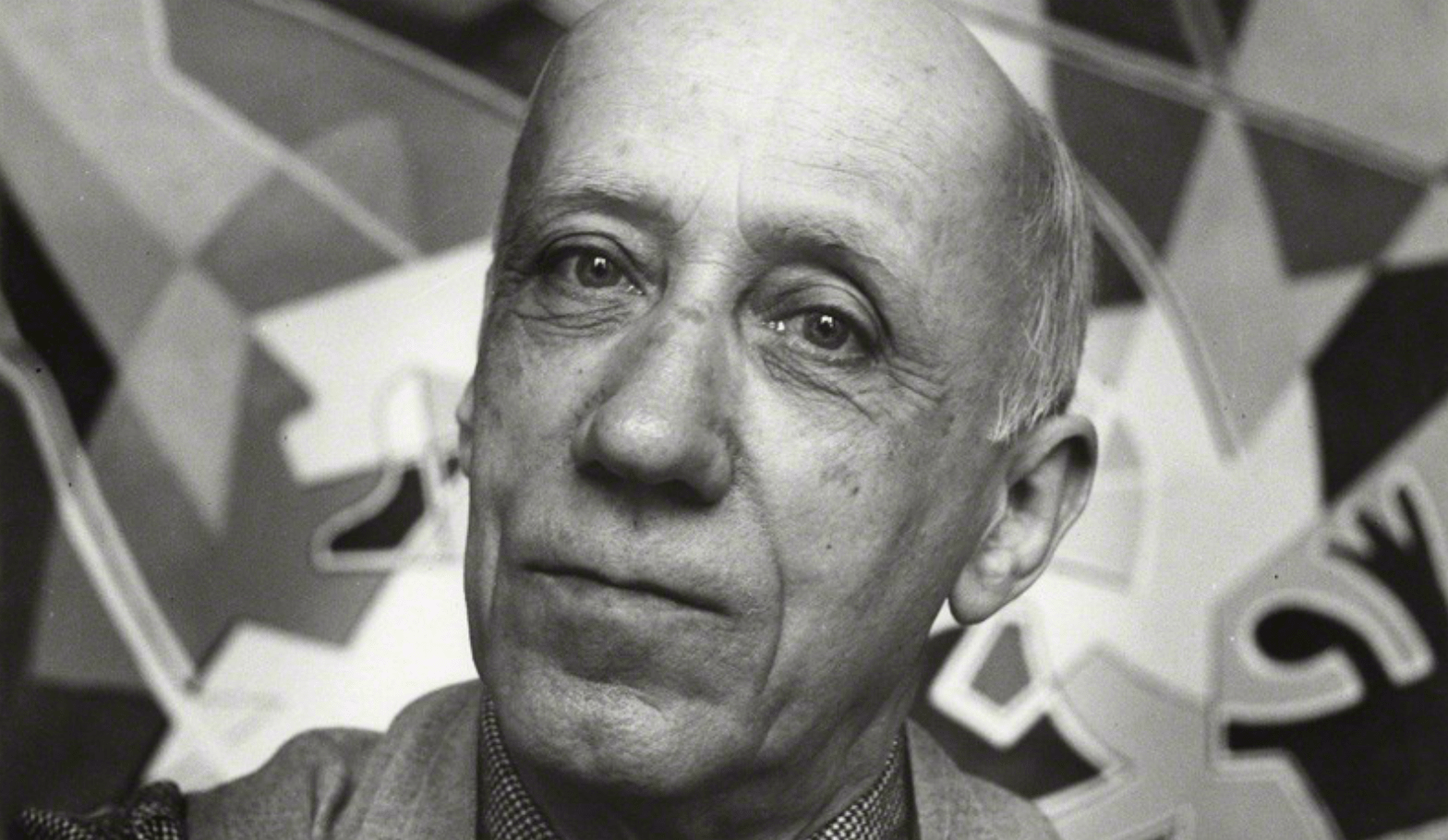
Today marks 55 years since the death of Gino Severini, founding member of the Italian futurist movement and key icon of early 20th century European avant-garde art.
Considered the most progressive of all 20th C. Italian artists, Severini’s work – shaped by the political and artistic shifts of the time – spans Divisionism, Futurism, Cubism, Return to order, Neo-Classicism, and Novecento Italiano. Despite his prolific impact on the art world, following his debut exhibition in London in 1913 there were no further Severini exhibits in the UK until the turn of the 21st Century.
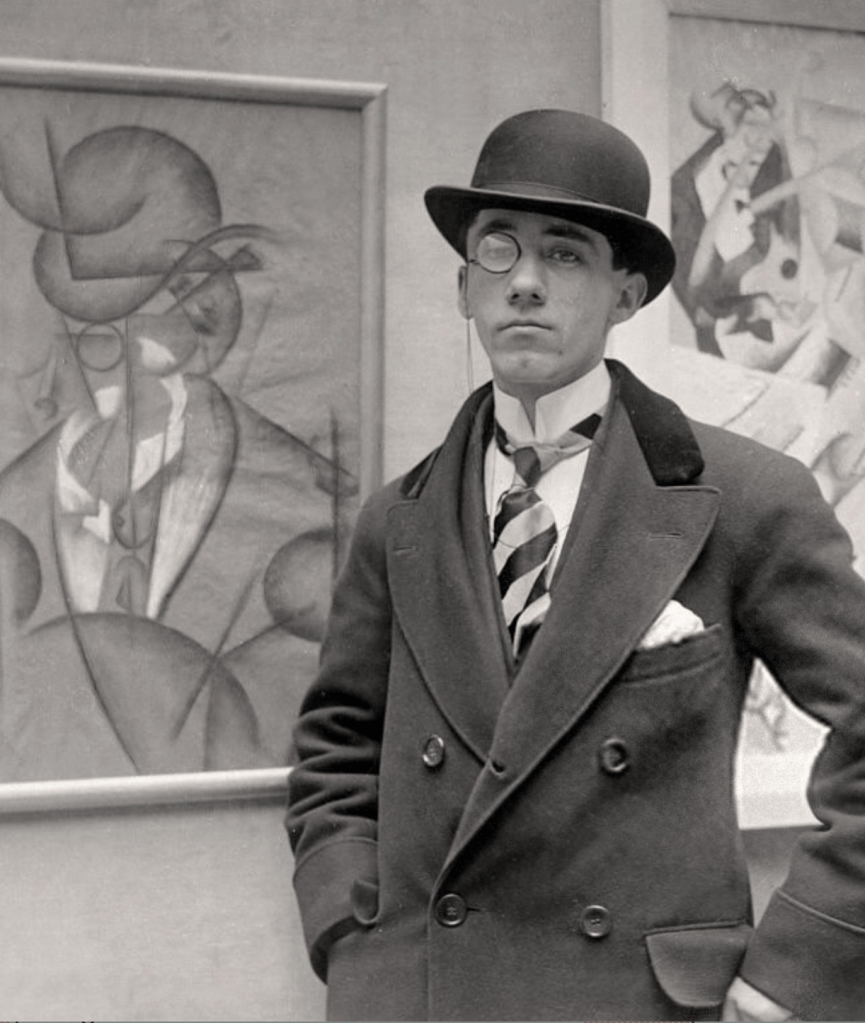
Along with friend and fellow Futurist Umberto Boccioni, Severini was introduced to Divisionism by Giacomo Balla around the turn of the 20th Century. The style’s separation of unmixed colour into dashes, dots and patches that interact optically to create a unified effect from a certain distance, became a core influence on his early works.
DYNAMISM & RAPIDITY
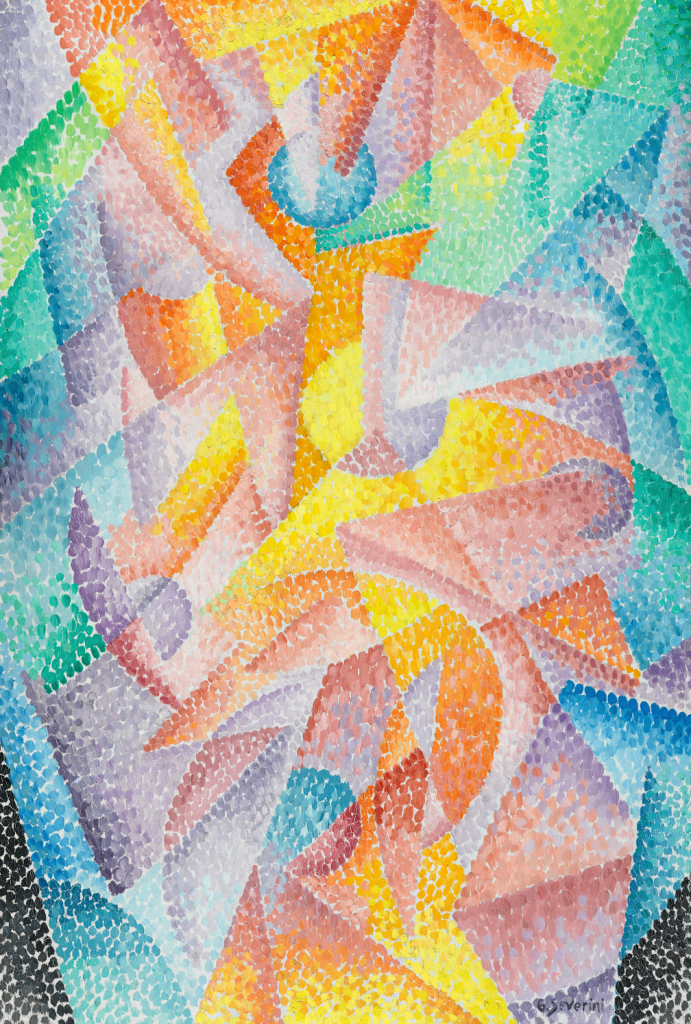
After moving to France in 1906, he found almost exclusive inspiration in the Parisian bourgeoise – the nightlife, street music and theatre shows – until 1915, and it was here that Severini was introduced to Symbolist literature and the work of philosopher Henri-Louis Bergson.
He would later reflect that, “The cities to which I feel most strongly bound are Cortona and Paris: I was born physically in the first, intellectually and spiritually in the second”. And the influence of French artists such as Robert Delaunay, who treated colour as a subject in itself, shaped Severini’s perception of what subject matter could or ought to be.
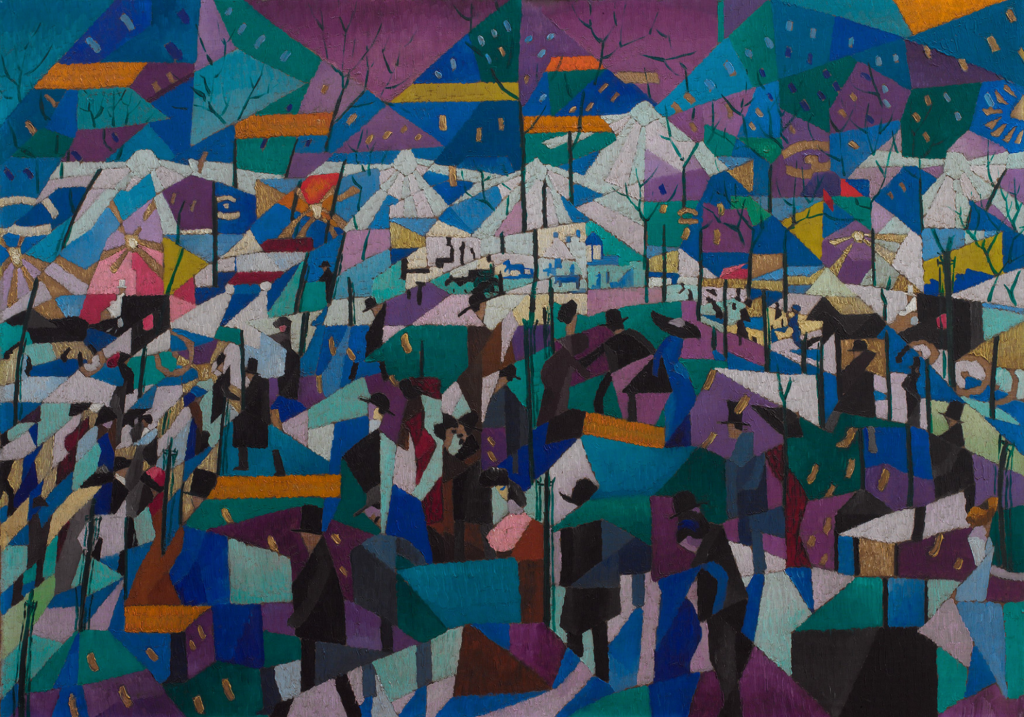
Severini’s use of Cubism principles was an expressive tool rather than an abstract one, and he began analysing technical theories of harmony and proportion in his segmentation of a subject, so as to bring a geometric order to his work. This approach defines pieces such as The Boulevard – a cityscape of intersecting jigsaw-like components. Described by art historian Celia White as “at once solid and dispersed, defined yet indecipherable”, it takes the fragmented form of Cubism, but is comprised of overlapping and interrupting patchworks. The juxtaposing colour and direction is what impresses the memory of a bustling afternoon.
RHYTHMIC FORM & SYMBOLISM
In breaking from typical Futurist subjects of mechanised power and motion, Severini applied Dynamism to the human form.
The dancing female holds a central place within Severini’s work – between 1910-1914 he painted over 100 works featuring dancers – and in 1921, he published an essay exploring his own mathematical theories on proportion, rhythm and time subtitled From Cubism to Classicism. Focusing on sensation rather than simple movement, his works deconstructed the impression and effect of energy as opposed to the formation of dance itself. This Symbolist theory Severini described as, “objects or forms taken from reality and compressed into ‘essences’, into ‘pure notion’.”
Severini’s blend of Divisionism and Cubism is perfectly captured within his 1911 work The Haunting Dancer, a composition of Parisian nightlife; gesturing, jostling, vibrating. This year marked a particularly productive period for Severini. Then, using Cubism’s collage technique for Blue Dancer in 1912, the draped pleats of the subject’s is dress strewn with sequins added directly onto the canvas, in a piece that riffs on Delaunay’s and Futurism’s explorations of the musicality of colour.
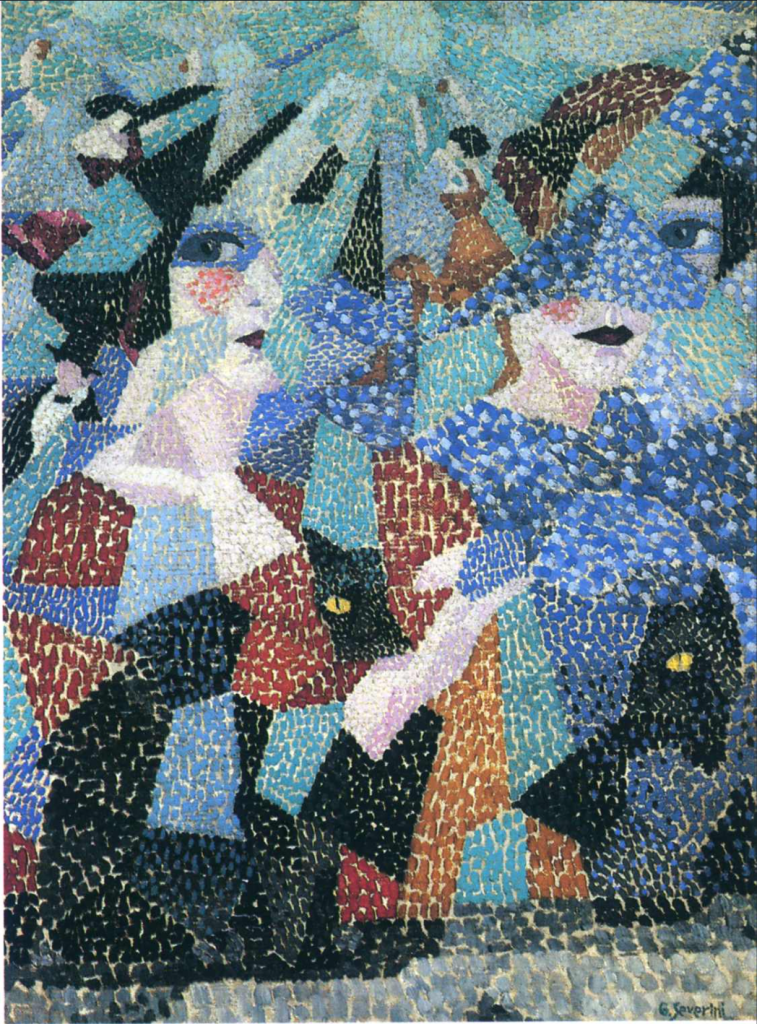
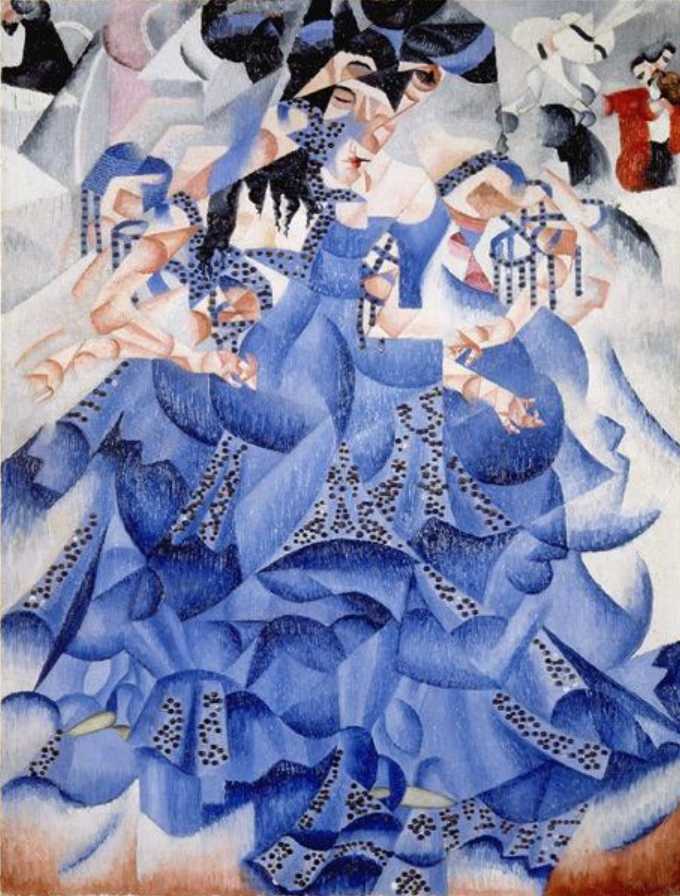
After moving to Anzio, a harbour city on Italy’s Lazio coast, to convalesce, Severini began to explore the symmetry of dance and water. Balancing simultaneous themes of fluidity and power, interchangeability and energy in his compositions that were at once boldly beating yet translucent and bodiless.
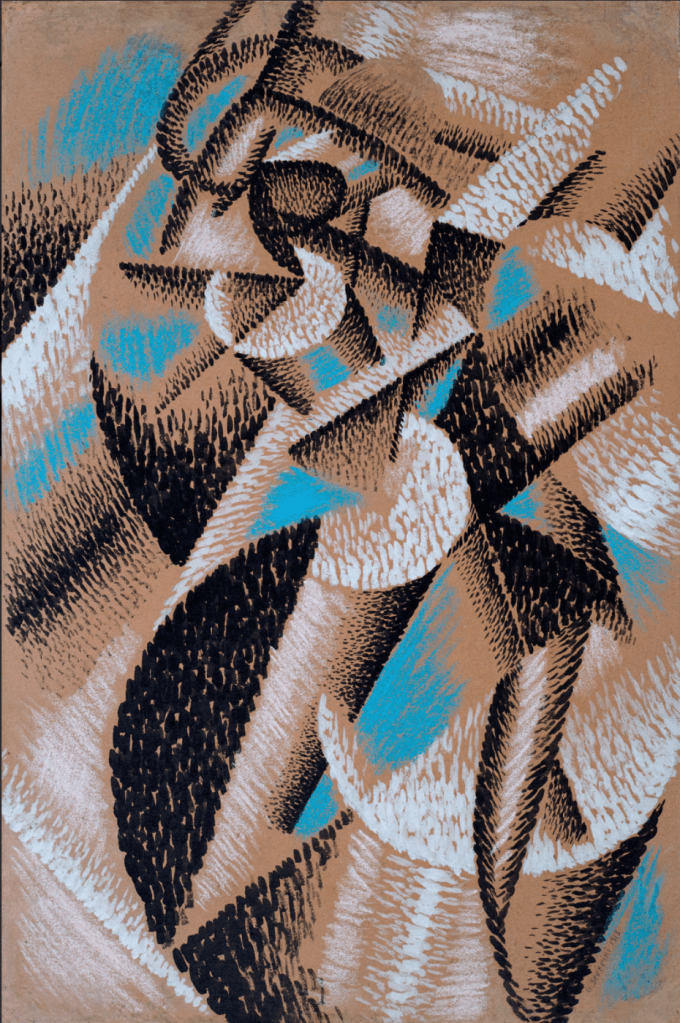
The vivid composition of 1914’s Sea = Dancer for example, showcases Severini’s vibrant use of colour and curves creating ever-redirecting, ever-interchangeable elements, and depicting the feverish fluidity of the water.
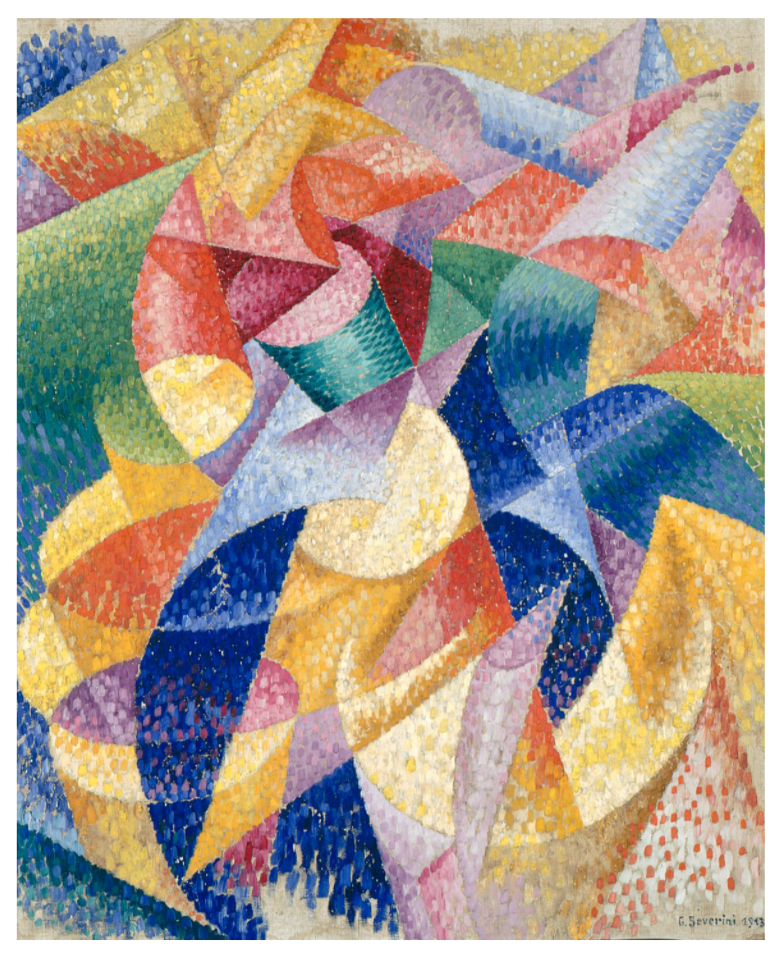
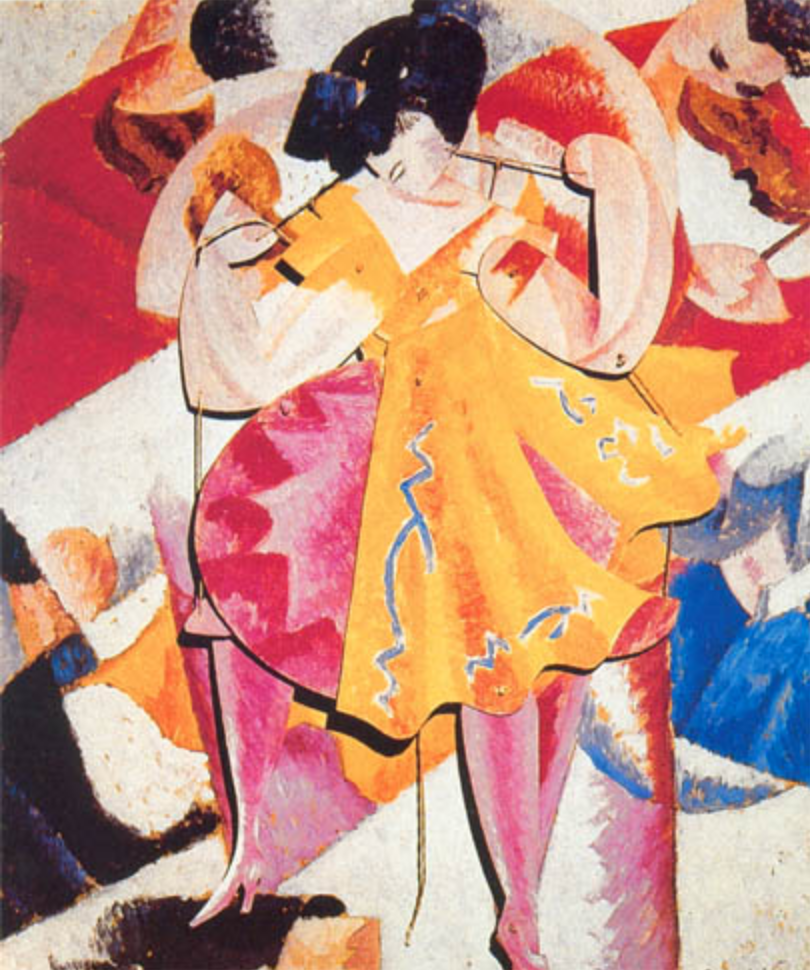
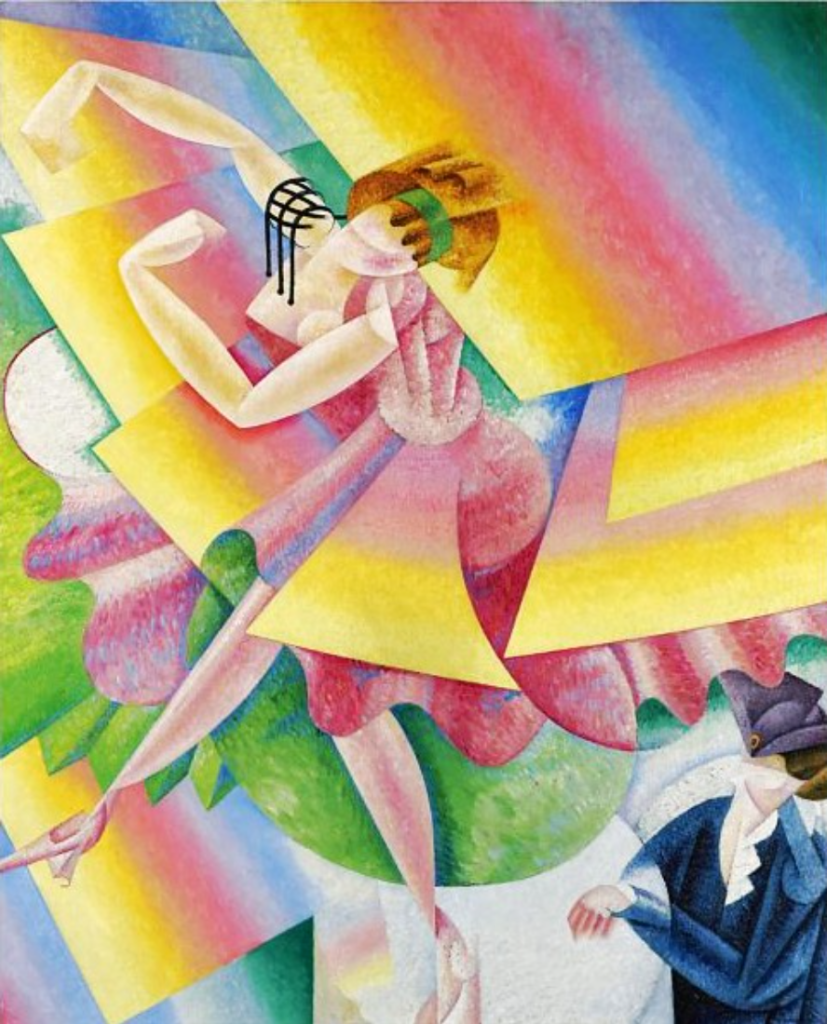
Severini returned to this theme again during the 1950s, after spending the 1920s and 1930s dividing his time between France and Italy, and moving into semi-abstract work during the 1940s when he also published his autobiography The Life of a Painter. An excerpt from which asserts, “Our eyes are the essential faculty between nature and our souls. The soul sustains its life in harmony.”
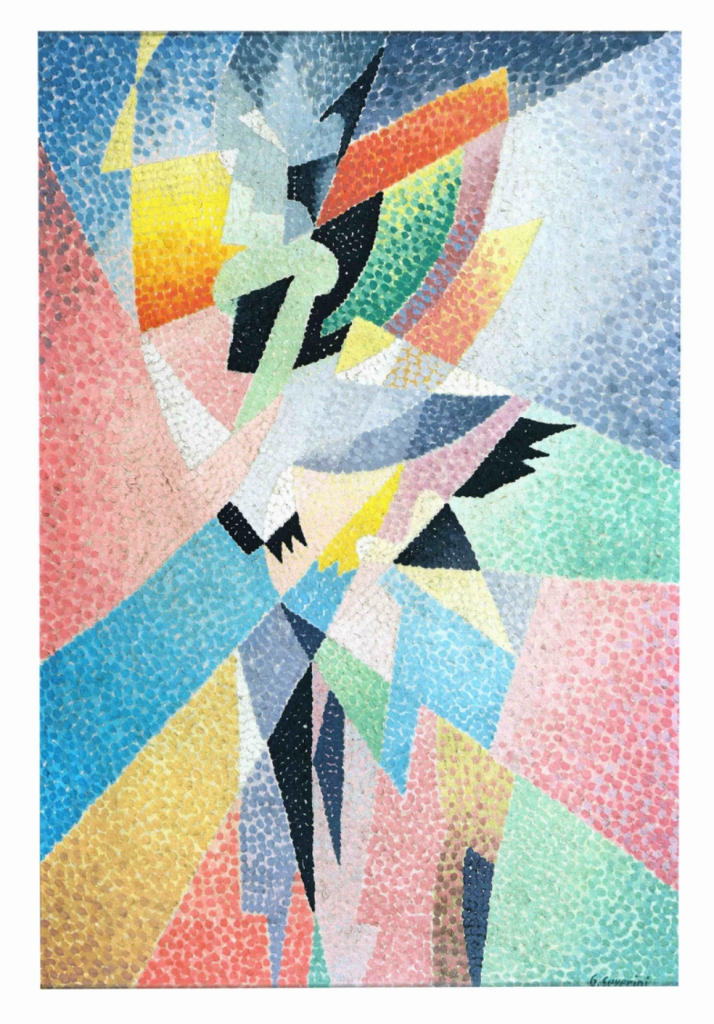
 The Faisean